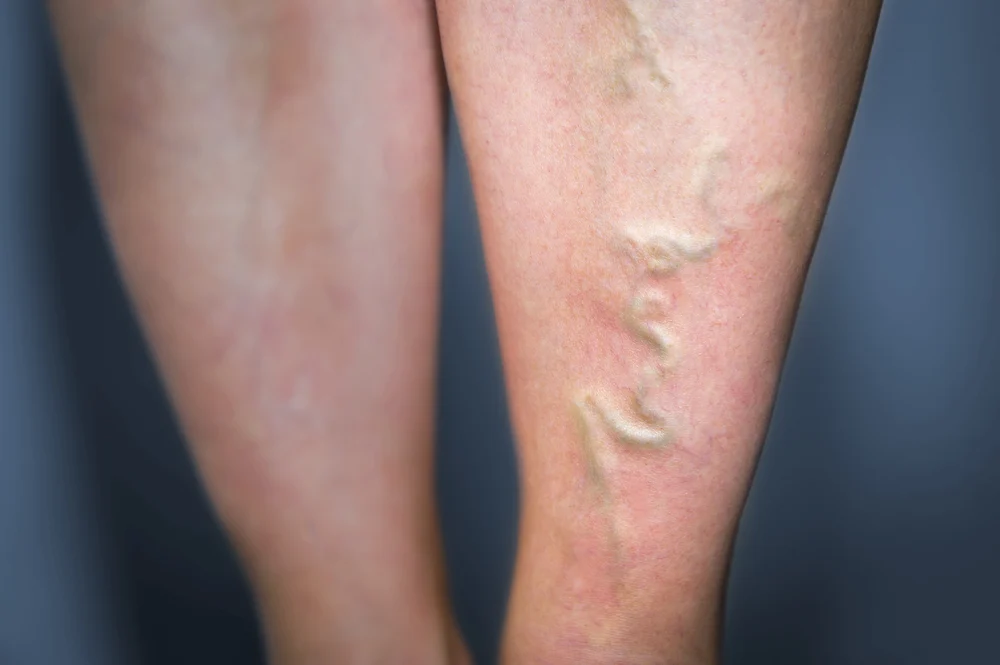
Veins become more visible for several reasons, ranging from completely harmless causes—like exercise or low body fat—to medical conditions such as vein reflux, phlebitis, or pregnancy-related changes. Knowing the difference can help you decide when it’s time to speak with a vein specialist.
Have you ever caught a glimpse of prominent veins on your arms or legs and wondered what’s going on beneath the surface? Maybe it happened after a workout, or perhaps you’ve noticed it more frequently as the years go by. You’re not alone…it’s one of the most common questions I hear from patients.
The truth is, visible veins don’t always signal a problem. Sometimes they’re a sign of a healthy, active body. Other times, they can point to something worth paying attention to. Either way, understanding why veins become more prominent puts you in a much better position to take care of your health.
In this post, I’ll walk through six of the most common reasons veins may pop out on your legs and arms, including when it’s perfectly normal and when it might be time to check in with a specialist.
Key Takeaways
- Exercise is a common and harmless cause. When you work out, increased blood flow and reduced venous resistance cause veins to expand and become visible. This is temporary and resolves once your heart rate returns to normal.
- Low body fat reduces the cushion between your skin and veins. With less tissue in the way, veins sit closer to the surface and are simply easier to see. This is most common in athletes and naturally lean individuals.
- Vein reflux is a medical condition that deserves attention. When the valves inside your veins stop working properly, blood pools in the lower legs instead of flowing back to the heart. This can cause bulging, aching, and fatigue, and it won’t improve on its own.
- Long-term IV use can damage vein walls. Repeated needle insertions can cause scar tissue to form, which weakens the vein and may make it more prominent over time.
- Phlebitis causes visible, inflamed veins. This condition involves inflammation of a vein (usually near the surface) and can cause redness, warmth, and tenderness along the affected area.
- Pregnancy puts significant pressure on leg veins. Hormonal changes and increased blood volume during pregnancy can cause veins to expand, often leading to varicose veins. Many of these improve after delivery, but some may require treatment.
1. Why Do My Veins Bulge During Exercise?
If you’ve ever finished a tough workout and noticed a network of veins snaking across your forearms or legs, you’ve experienced what athletes often call “the pump.” During exercise, your muscles demand more oxygen-rich blood. Your heart responds by pumping faster and harder, increasing the volume of blood flowing through your body.
To accommodate this surge, the smooth muscle lining your veins relaxes. This allows the veins to expand, pushing them closer to the skin’s surface. At the same time, your body temperature rises, causing blood vessels to dilate even further as your body works to cool itself down.
The result? A temporary but very visible network of veins that fades once your heart rate drops and blood flow returns to its resting state.
For most people, this is completely normal. It’s actually a sign that your cardiovascular system is doing its job efficiently. There’s nothing to worry about unless you notice pain, persistent swelling, or changes that don’t resolve after your cool-down.
Normal vs. Not:
- Normal: Veins flatten within an hour of cooling down.
- Not normal: Veins stay ropy, ache, or the skin turns warm/rosy—time for a scan.
Pro tip: Staying hydrated helps veins collapse faster post-workout, because plasma volume rebounds quickly.
2. Can Low Body Fat Make Veins More Visible?
Absolutely. Fat lives between skin and veins; less fat = less padding. Drop from, say, 25 % to 12 % body fat and those once-hidden vessels look like blue highways. Competitive bodybuilders even dehydrate briefly to exaggerate vascularity on stage.
If you have a higher percentage of body fat, your veins may be less visible because the fat acts as a cushion between the veins and the skin. On the other hand, if you have a lower percentage of body fat, your veins may become more prominent and visible under the skin. This is because there is less fat between the veins and the skin, allowing the veins to be more visible.
Additionally, as you lose body fat, your veins may become even more visible because your skin becomes thinner, further highlighting the veins beneath. So, if you’re looking to make your veins more prominent, reducing your body fat percentage through diet and exercise can be a helpful strategy. However, it’s important to note that excessively low body fat percentages can also be unhealthy and may cause other health problems.
Pro tip: Leveraging diet and exercise helps you achieve and maintain a healthy weight. Losing weight reduces pressure on your veins, helping blood flow freely from your legs to your heart and preventing painful swelling, redness, and vein disease.

3. Vein Reflux: When Valves Fail and Blood Backs Up
Picture a door that never quite latches; blood sneaks back down and pools. That’s venous reflux or chronic venous insufficiency (CVI). Over time the vein stretches, twists, and surfaces as a varicose bulge.
Early Clues You Might Miss
- Evening ankle swelling or tightness in boots
- Nagging “cement legs” after standing all day
- Restless-leg twitching at night
Vein reflux has visible signs like spider veins or bulging varicose veins, but more commonly people simply have a lot of aching fatigue, leg cramps, and restless legs. With invisible symptoms, the only way you know that that’s what’s going on is by getting a vein reflux ultrasound which allows the medical professional to sort out what’s going on in the circulation.
Sometimes the wrong ultrasound is ordered, and you know you are getting a vein reflux ultrasound is getting done when your ultrasound is done while you are standing and not lying down. If you are standing, you know you are getting a vein reflux ultrasound. And then, in the cases where vein reflux is present, those people can be helped with vein treatment.
4. Long-Term IV Use: What Repeated Needle Insertions Can Do
When a person receives long-term intravenous (IV) therapy, the frequent insertion of needles and catheters into their veins can cause damage to the veins over time. Repeated punctures can cause inflammation and scarring, which can make the veins more prominent and visible under the skin, and usually the prominent vein is due to a closed-off vein called chronic phlebitis. It is not a dangerous condition, but can be associated with initial discomfort and then a more permanent and prominent cord of the vein.
In addition, the use of IV fluids can cause the veins to become swollen and distended, making them more visible as well. This effect is most commonly seen in individuals who require frequent IV treatments, such as chemotherapy patients or those with chronic illnesses. To reduce the risk of long-term IV therapy causing damage to the veins, healthcare professionals may rotate the injection sites and use smaller catheters.
5. Phlebitis: Inflammation That Makes Veins Stand Out
Phlebitis can also cause veins to become more prominent and visible under the skin. Phlebitis is rarely dangerous but may need therapy to reduce the discomfort in the early phase. A blood clot occurs when a clump of blood cells forms in a vein, blocking the flow of blood. This can cause the vein to become inflamed and swollen, making it more visible under the skin.
Depending on the size and location of the clot, other symptoms may also be present, such as pain, warmth, and redness in the affected area. It’s always a good idea to have your medical provider evaluate whether or not you should get an ultrasound because of deep vein blood clots or other serious complications such as pulmonary embolism (a blockage in the lungs).
Red-Flag Combo:
- Sudden calf pain or swelling
- Warmth/red streak
- Shortness of breath
If you experience these three symptoms in combination, we strongly encourage you to seek medical treatment immediately.
6. Pregnancy: A Common Cause of Visible and Varicose Veins
During pregnancy, the body undergoes significant changes to support the growth and development of the fetus. Blood flow doubles during pregnancy so that it can supply blood to the uterus and the fetus, and because of that, it’s common for pregnant women to develop veins in their arms and legs that bulge beneath the surface of the skin. The veins become more prominent because the hormones of pregnancy cause the veins to dilate and enlarge, and in many cases abnormal vein reflux develops.
Self-help during pregnancy:
- Graduated compression stockings
- Left-side sleeping to ease pelvic vein pressure
- Light movement every 30–60 minute
Often, after a woman delivers her baby, vein circulation returns to normal and the veins reduce in size. However, many women have persistent visible veins and symptoms after pregnancy and don’t know that treatments can really help them. It’s important to note though, that repeated pregnancies will cause the symptoms to return, making it more difficult for the veins to return to normal.
Checklist for Happier, Healthier Veins
Whether your visible veins are harmless or linked to an underlying condition, there are practical steps you can take every day to support your vein health:
- Walk regularly. Even short walks help activate the calf muscles, which pump blood back toward the heart.
- Wear compression stockings. Gradient compression stockings apply gentle pressure that keeps blood moving upward. We recommend 16–20 or 20–30 mmHg for most people.
- Elevate your legs. Sit or lie with your feet a few inches above heart level for 15 minutes, two to three times per day.
- Stay active. Swimming, cycling, and walking are particularly good for vein health.
- Watch your diet. Reducing salt helps prevent fluid retention that worsens leg swelling. A low-carbohydrate diet and limiting fructose may also help manage symptoms.
- Maintain a healthy weight. Excess body weight increases pressure on leg veins and raises the risk of vein problems.
- Don’t ignore new symptoms. Aching, heaviness, swelling, skin changes, or veins that seem to be growing should prompt a conversation with a specialist.
Veins can become more prominent and visible on the arms and legs for a variety of reasons, some normal and some not. Exercise, body fat percentage, vein reflux, long-term IV therapy, blood clots, and pregnancy are just a few of the many factors that can contribute to this phenomenon. While some of these causes may be relatively harmless, others can be indicative of underlying health conditions that require medical attention.
If you are concerned about the appearance of bulging veins or are experiencing any associated symptoms, it’s important to speak with a healthcare professional to determine the underlying cause and develop an appropriate treatment plan. If you suspect that you have vein reflux, the next step is to schedule a free vein screening.

Frequently Asked Questions
Is it normal for veins to pop out during and after exercise?
Yes, it’s completely normal. During exercise, blood flow increases dramatically to supply oxygen to working muscles. Your veins expand to handle the extra volume, and with less surrounding fat or fluid to cushion them, they become more visible at the surface. This typically resolves within minutes of finishing your workout.
What is the difference between a varicose vein and a visible vein?
A visible vein simply sits close to the skin’s surface and can be seen, but it functions normally and doesn’t cause symptoms. A varicose vein, on the other hand, is a vein that has become swollen, twisted, and enlarged because of damaged valves that allow blood to pool rather than flow efficiently back to the heart. Varicose veins are often accompanied by aching, heaviness, and fatigue.
What does vein reflux feel like?
Vein reflux often causes a feeling of heaviness, fullness, or aching in the legs, especially after long periods of standing or sitting. Some people also experience swelling around the ankles, itching, or a restless sensation in the legs. Visible bulging or twisted veins on the surface may also be present.
Why does a vein ultrasound need to be done standing up?
A standing venous ultrasound is the standard of care for detecting vein reflux because gravity is essential to making reflux visible. When you stand, blood is pulled downward into the lower legs, making it possible to observe whether the valves in your veins are holding or allowing blood to backflow. When the exam is done lying down, gravity’s effect is removed, and most cases of reflux won’t show up, leading to a missed diagnosis.
Can pregnancy-related varicose veins go away on their own?
Many do improve after delivery, as blood volume normalizes and pressure on the pelvic veins is relieved. However, some varicose veins persist, particularly after multiple pregnancies. It’s best to wait until you’ve finished having children before pursuing formal treatment, though self-care measures like compression stockings can help manage symptoms during pregnancy.
When should I see a vein specialist about my visible veins?
You should consider scheduling a vein evaluation if your visible veins are accompanied by aching, swelling, heaviness, skin discoloration, or itching. You should also seek prompt care if a vein becomes red, warm, and tender…as this may indicate phlebitis. If you’re ever unsure, a free vein screening is a simple, no-commitment way to get clarity.
Are vein treatments painful or require a long recovery?
Most modern vein treatments are minimally invasive and designed with patient comfort in mind. Procedures like endovenous ablation and sclerotherapy are performed in-office with little to no downtime. Most patients return to their normal routines immediately. Compression stockings are typically required after treatment, and your care team will provide specific instructions for your recovery.
Live in mid-Missouri and looking for answers? Schedule a free vein screening if you think you may have a vein condition. Our screening will help you figure out what’s behind your symptoms, and if a vein condition is present, we’ll help you find a treatment solution.