

Quick answer: Deep vein thrombosis (DVT) is a blood clot that forms in a deep vein, usually in the leg. Unlike superficial phlebitis, which affects veins near the skin’s surface, DVT carries a serious risk: if the clot breaks loose, it can travel to the lungs and cause a pulmonary embolism. Watch for swelling, pain, warmth, and skin discoloration, and seek care right away if you notice these signs.
Have you ever noticed one leg feeling heavier or more swollen than the other and wondered if it’s something to worry about? As I often remind my patients at Missouri Vein Care, that question is worth asking, because the answer could make a real difference in your health.
Deep vein thrombosis doesn’t always announce itself with dramatic symptoms. Sometimes it’s a quiet ache. Sometimes it’s a patch of skin that looks a little redder than usual. And sometimes, unfortunately, there are no warning signs at all until a complication develops. That’s exactly why understanding DVT, how it differs from more common vein issues, and when to seek help matters so much, especially if you’re over 40 and already managing some degree of venous insufficiency.
This guide walks you through what DVT is, why it’s so often missed, the symptoms to watch for, and how it differs from superficial phlebitis, a far less dangerous condition that’s frequently confused with it. We’ll also cover prevention strategies you can start using today.
Key takeaways
- DVT is a blood clot that forms in a deep vein, most often in the calf or thigh.
- Symptoms can be subtle: swelling, pain, warmth, and skin discoloration are the main signs.
- Left untreated, DVT can lead to a pulmonary embolism, a life-threatening condition.
- Superficial phlebitis affects veins closer to the skin and is generally less dangerous, though it still deserves attention.
- Ultrasound imaging is the standard way primary care providers confirm a DVT diagnosis.
- Staying active, wearing compression stockings, staying hydrated, and talking with your primary care provider are proven ways to lower your risk.
What is deep vein thrombosis (DVT)?
Deep vein thrombosis occurs when a blood clot forms inside one of the body’s deep veins, most commonly in the lower leg or thigh. Think of your veins as a network of highways carrying blood back to your heart. When a clot forms in one of the larger, deeper routes, it can partially or fully block that flow.
The real danger isn’t just the blockage itself. If a piece of that clot breaks free, it can travel through the bloodstream to the lungs, causing a pulmonary embolism. This is a medical emergency, and it’s the reason DVT is taken so seriously, even when the leg symptoms themselves seem mild.
Why is DVT so hard to detect?
Here’s something I tell my patients often: DVT doesn’t play by predictable rules. Some people experience sharp, obvious pain. Others notice nothing more than a faint ache that they chalk up to a long day on their feet. And a significant number of people with DVT have no symptoms at all.
This inconsistency is exactly why DVT often goes unnoticed until it becomes more serious. Risk factors like prolonged sitting during travel, recent surgery, pregnancy, certain medications, and existing vein conditions can all raise your risk without producing any obvious red flags. If you fall into one of these categories, paying closer attention to your legs isn’t overreacting. It’s good sense.
What are the symptoms of DVT?
While DVT can be silent, it often does leave clues. Here’s what to watch for.
Pain
A cramping or aching sensation, often starting in the calf, is one of the most common signs. It can feel similar to a muscle cramp, which is part of why it’s so easy to dismiss.
Swelling
Swelling that affects only one leg, rather than both, is a meaningful signal. If one ankle or calf suddenly looks noticeably larger than the other, don’t ignore it.
Red or discolored skin
Skin over the affected area may appear red, purple, or unusually warm to the touch. This happens because the trapped blood and inflammation affect circulation near the surface.
Tenderness and sensitivity
The area around the clot may feel sore or tender when you press on it, even if there’s no visible swelling yet.
Symptoms during or after immobility
Pay close attention if symptoms appear after a long flight, a lengthy car ride, or an extended hospital stay. Periods of immobility are one of the most common triggers for DVT, and symptoms that show up shortly afterward deserve prompt evaluation.
When should you seek medical attention for DVT?
If you notice sudden swelling, pain, warmth, or discoloration in one leg, don’t wait to see if it improves on its own. Contact your primary care provider the same day.
Seek emergency care immediately if you experience shortness of breath, chest pain, a rapid heartbeat, or coughing up blood. These symptoms can indicate that a clot has traveled to the lungs, and every minute matters.

How is DVT confirmed?
The standard tool for diagnosing DVT is a duplex ultrasound. This painless, noninvasive imaging test uses sound waves to create a picture of blood flow through your veins, allowing your primary care provider or vein specialist to see exactly where a clot has formed and how significant it is.
In some cases, additional blood tests, such as a D-dimer test, may be used alongside imaging to help confirm or rule out a clot. The good news is that diagnosis is usually fast, and once a clot is identified, treatment can begin right away.
What is superficial phlebitis, and how is it different from DVT?
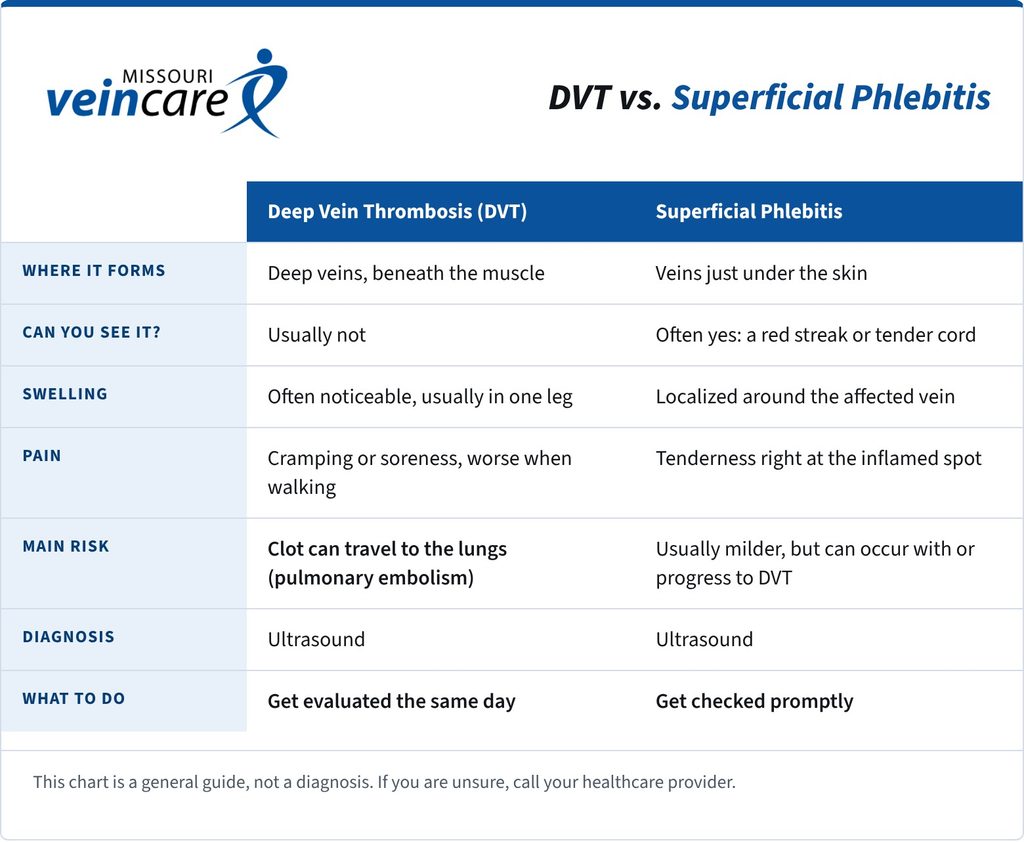
It’s easy to confuse DVT with superficial phlebitis, since both involve inflammation and discomfort in the legs. The key difference comes down to location and risk.
Superficial phlebitis affects veins just beneath the skin’s surface, often ones already weakened by varicose veins. It typically causes redness, warmth, and tenderness along a visible, rope-like vein. While uncomfortable, superficial phlebitis rarely leads to the kind of serious complications associated with DVT, because clots in surface veins are far less likely to travel to the lungs.
DVT, by contrast, forms in the larger veins deep within the muscle tissue, out of sight and often without the telltale visible vein changes that come with superficial phlebitis. Choose a same-day evaluation with your primary care provider if you’re unsure which condition you’re dealing with. The two can look similar on the surface, but they call for very different levels of urgency.
How can you prevent DVT?
The encouraging news is that several simple habits can meaningfully lower your risk.
Stay active
Movement keeps blood flowing and prevents it from pooling in your lower legs. If you’re sitting for long stretches, whether at a desk or on a flight, stand up and stretch every hour or so.
Wear compression stockings
Compression stockings gently support healthy circulation, making them especially helpful during travel, after surgery, or if you already live with varicose veins or other venous insufficiencies.
Stay hydrated
Dehydration thickens the blood, which can raise clotting risk. Drinking enough water throughout the day supports healthy circulation.
Talk to your doctor
If you have risk factors such as a family history of clotting disorders, recent surgery, or existing vein disease, talk with your primary care provider about a personalized prevention plan. Early conversations lead to better outcomes.
Take the next step toward healthier legs
Your legs carry you through life, and they deserve attention when something feels off. If you’ve noticed swelling, pain, or changes in your skin that concern you, don’t wait and wonder. Schedule a free vein screening with Missouri Vein Care today, and let our team of experts give you the clarity and personalized care you deserve.

Frequently asked questions
What does DVT pain feel like?
DVT pain often feels like a cramp or ache in the calf, though some people feel little to no pain at all. It’s frequently mistaken for a pulled muscle, which is why unexplained leg discomfort deserves a closer look.
Is DVT the same as a pulmonary embolism?
No. DVT is a blood clot in a deep vein, usually in the leg. A pulmonary embolism occurs when a piece of that clot breaks free and travels to the lungs. DVT is the cause; pulmonary embolism is the potential, life-threatening consequence.
Can superficial phlebitis turn into DVT?
In some cases, yes. If a clot in a surface vein extends into a deeper vein, it can develop into DVT. This is one reason any suspected clot, even a surface one, should be evaluated by a primary care provider.
How long does DVT treatment take?
Treatment timelines vary depending on the size and location of the clot, but many people begin blood-thinning medication right after diagnosis and continue treatment for three to six months under medical supervision.
Who is most at risk for DVT?
People who are over 60, recovering from surgery, pregnant, sitting for long periods, or living with varicose veins or other venous insufficiencies face a higher risk. A family history of clotting disorders also raises risk.
Can DVT be prevented?
Yes, in many cases. Staying active, wearing compression stockings, staying hydrated, and addressing underlying vein conditions all help reduce risk. Talk with your primary care provider about a prevention plan suited to you.
