
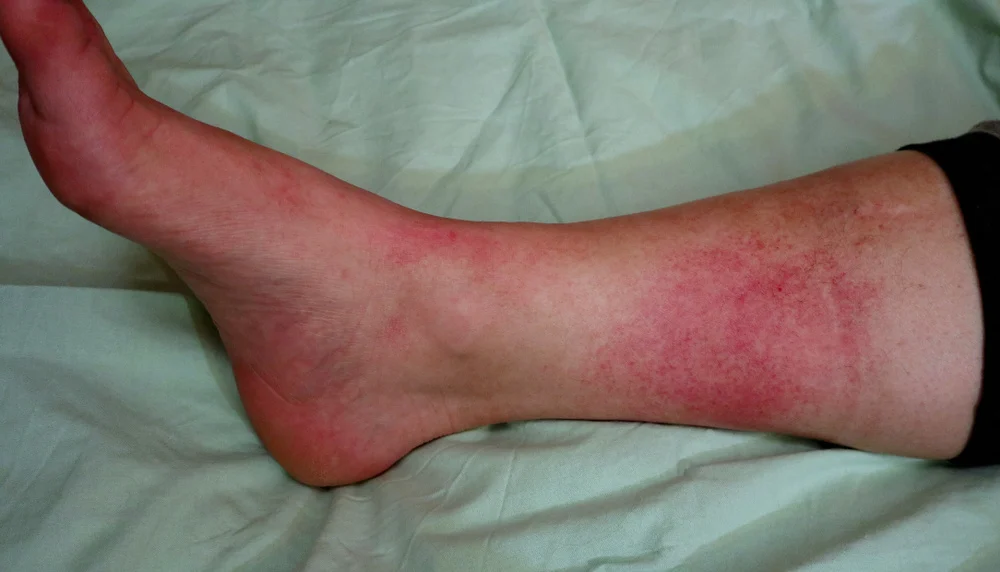
Quick answer: A persistent, itchy rash on the lower leg, especially near the ankle, can signal venous eczema (also called stasis dermatitis), a condition caused by vein reflux. When faulty vein valves let blood pool in the lower leg, the skin becomes inflamed, flaky, and discolored. Steroid creams may calm the itch, but a vein ultrasound is needed to find and treat the real cause.
Key takeaways
- Venous eczema, also known as stasis dermatitis, is a reddish or brownish, flaky, and intensely itchy rash that typically shows up on the lower inner calf, near the ankle, or behind the calf.
- Only twenty percent of people with an underlying vein condition actually have visible varicose veins, so a normal-looking leg doesn’t rule out vein disease.
- The rash forms because faulty vein valves allow blood to pool and leak fluid into the surrounding tissue, triggering inflammation under the skin.
- Steroid creams can quiet the itching and redness for a while, but they don’t correct the vein reflux that’s causing the problem in the first place.
- Left untreated, venous eczema can progress to lipodermatosclerosis, a hardening and tightening of the skin and tissue.
- A standing vein ultrasound is the most reliable way to confirm vein reflux, and many patients notice a real improvement after just one vein treatment session.
What is venous eczema and how is it connected to vein disease?
Venous eczema, also called stasis dermatitis, is a skin reaction that develops when blood doesn’t flow properly back up the leg toward the heart. It’s not a separate skin disorder. It’s a visible symptom of an underlying vein condition called vein reflux, where the one-way valves inside your veins weaken and allow blood to flow backward and pool in the lower leg.
Here’s something that surprises a lot of my patients: you don’t need to see bulging varicose veins to have this problem. In fact, only twenty percent of people with a vein condition have visible veins. That means the other eighty percent are walking around with an underlying issue that shows up another way, often as a rash, swelling, heaviness, or aching that gets worse by the end of the day.
As I often observe in my practice, women are especially likely to dismiss these symptoms as “just dry skin” or “something that comes with age.” But when a rash keeps coming back in the same spot despite moisturizer and over-the-counter creams, it’s worth asking a more pointed question: could this be coming from inside the vein, not the surface of the skin?
Why aren’t steroid creams enough to treat venous eczema?
Steroid creams can reduce the redness and itching of venous eczema, but they don’t do anything to fix the vein reflux that’s causing the rash to appear in the first place. Think of it this way: the cream treats the symptom on the surface, while the real problem keeps building pressure underneath.
This is one of the most important points I share with patients. Steroid creams are genuinely helpful for short-term relief, and your primary care provider may reasonably recommend one while you’re waiting to see a vein specialist. But if the rash keeps returning every time you stop using the cream, that’s a strong signal that the underlying vein condition still needs attention.
Left unaddressed, venous eczema can progress to a more serious condition called lipodermatosclerosis, where the skin and underlying tissue become thickened, hardened, and tighter than normal. In more advanced cases, this ongoing inflammation also raises the risk of developing a non-healing skin sore, sometimes called a venous ulcer. Catching and treating the vein problem early can help you avoid reaching that point.
How do vein conditions cause skin rashes in the first place?
Vein conditions cause skin rashes through a process that starts well below the surface. Healthy veins contain small one-way valves that keep blood moving upward toward the heart. When those valves weaken or fail, a condition known as vein reflux, blood flows backward and pools in the lower leg instead of circulating properly.
That pooled blood raises the pressure inside the veins, and over time, fluid and blood cells begin leaking out into the surrounding tissue. This leakage triggers an inflammatory response in the skin, which is what produces the redness, flaking, discoloration, and itching associated with venous eczema.
It’s a bit like a traffic jam building up on a one-way street. The longer the congestion sits there, the more it spills out into the areas around it. The skin changes you can see are really just the visible overflow of a circulation problem happening underneath.

How does a vein ultrasound confirm the diagnosis?
A standing vein ultrasound confirms venous eczema by showing exactly how well blood is flowing through the veins in your leg while you’re upright, which is when vein reflux is easiest to detect. This painless, non-invasive imaging test lets a vein specialist see which valves aren’t closing properly and map out the full extent of the reflux.
Diagnosing the condition this way matters because it moves treatment beyond guesswork. Rather than cycling through creams and moisturizers that only ease symptoms, your care team can identify the specific vein or veins causing the pooling and recommend a targeted, minimally invasive treatment plan.
The encouraging part is how quickly many patients respond once the underlying vein problem is treated. Many patients see significant improvement after just one vein treatment session, with reduced itching, calmer skin, and less swelling in the weeks that follow. If you’ve been living with a rash that won’t fully go away, that kind of relief is worth exploring.
If a rash near your ankle or calf keeps returning, don’t wait for it to progress. To find out if an underlying vein condition is the cause of the eczema on your lower legs, schedule a free vein screening. Getting answers now can spare you from more serious skin complications down the road, and it might be simpler to treat than you expect.

Frequently asked questions
Is venous eczema the same as regular eczema?
No. Venous eczema, also called stasis dermatitis, looks similar to regular eczema but has a different root cause. It develops specifically from vein reflux and poor circulation in the lower leg, while typical eczema is usually linked to skin allergies or irritants.
Can venous eczema go away on its own?
Venous eczema rarely resolves completely on its own because the underlying vein reflux doesn’t correct itself. Creams can ease the itching and redness temporarily, but the rash tends to return until the vein condition causing it is treated.
Do I need visible varicose veins to have a vein condition?
No. Only twenty percent of people with a vein condition have visible varicose veins. The other eighty percent may notice symptoms like rash, swelling, heaviness, or aching without ever seeing a bulging vein.
What happens if venous eczema is left untreated?
Untreated venous eczema can progress to lipodermatosclerosis, where the skin and tissue thicken and harden. It also raises the risk of developing a non-healing skin sore, so earlier treatment generally leads to a better outcome.
How long does recovery take after vein treatment?
Many patients see significant improvement after just one vein treatment session, with calmer, less itchy skin within weeks. Your specialist can give you a more personalized timeline based on the extent of your vein reflux.