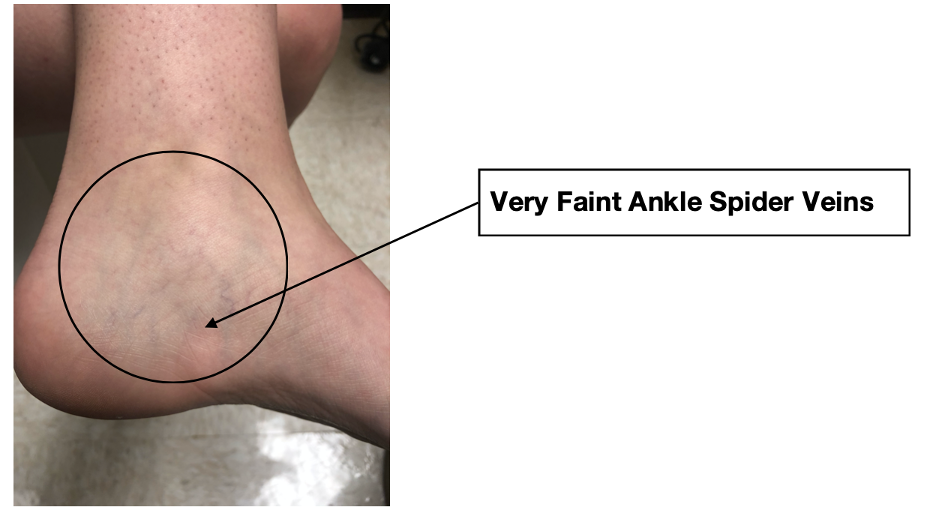
The most common finding with vein reflux seen in nearly all patients is the appearance of small spider veins, especially on the ankle and calf. They are tiny spider veins around the ankle which are due to high pressure in the veins. They slowly enlarge and grow each year as symptoms also worsen.
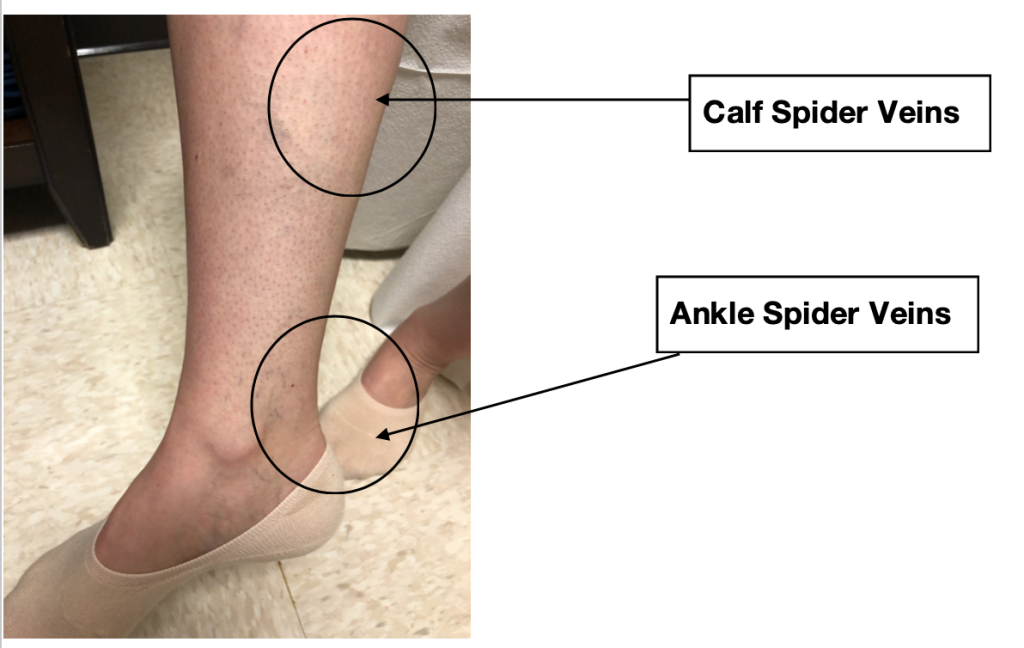
This shows spider veins beginning to grow up the leg. As the vein pressure continues to exert its daily effects, the tiny veins are first affected and enlarge first at the ankle where the pressure is greatest. As the pressure continues to grow with time, the spider veins higher up the calf (where the pressure is initially lower) are also affected and become visible. As the pressure continues to grow, bulging veins form as well, called varicose veins. Varicose veins are relatively uncommon, only 20% or 1 in 5 people with vein reflux have them.
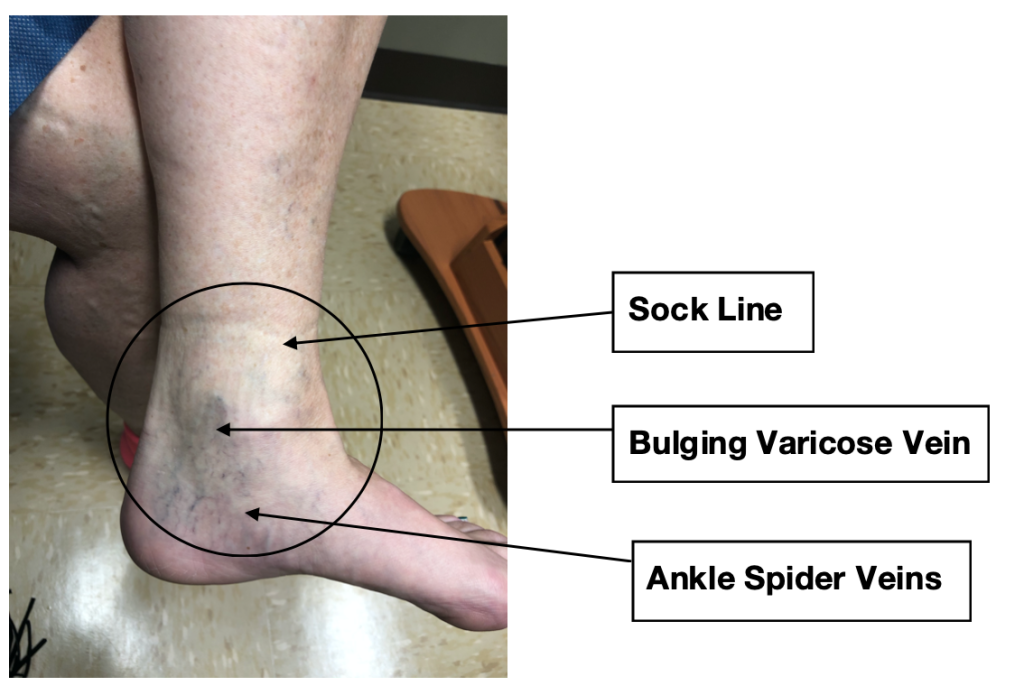
You may also see s a visible sock line which indicates the presence of swelling and tissue edema due to the high pressure in the veins of the calf. The high vein pressure causes all three problems seen here: sock line swelling, bulging varicose vein and spider veins.
Some people have thigh spider veins which grow and expand each year. This is due to vein pressure causing this area of circulation to distend and grow. These can cause burning, stinging, itching and pain. This fan shaped appearance is very common. Often you can see faint feeder veins under the skin leading to the spider veins, and these are the source of high vein pressure and need to be closed down with sclerotherapy if these spider veins are to fade away.
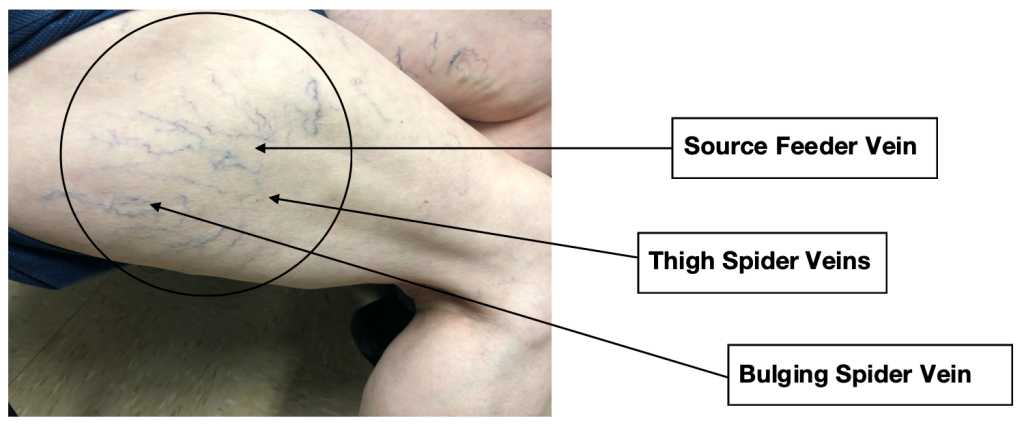
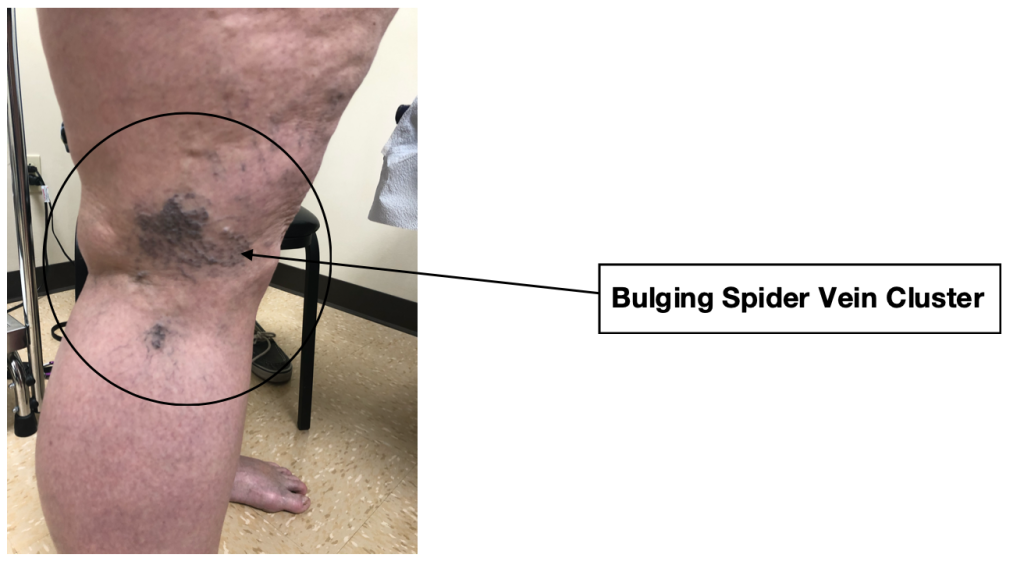
A bulging spider vein is under higher and abnormal vein pressure and is more likely to cause symptoms such as burning, stinging, pain, or itching. Often you can see several feeder veins under the skin leading to the patch and which are the source of the high pressure. Closing off these abnormal feeder veins with sclerotherapy is essential to allow this patch to close down and fade away.
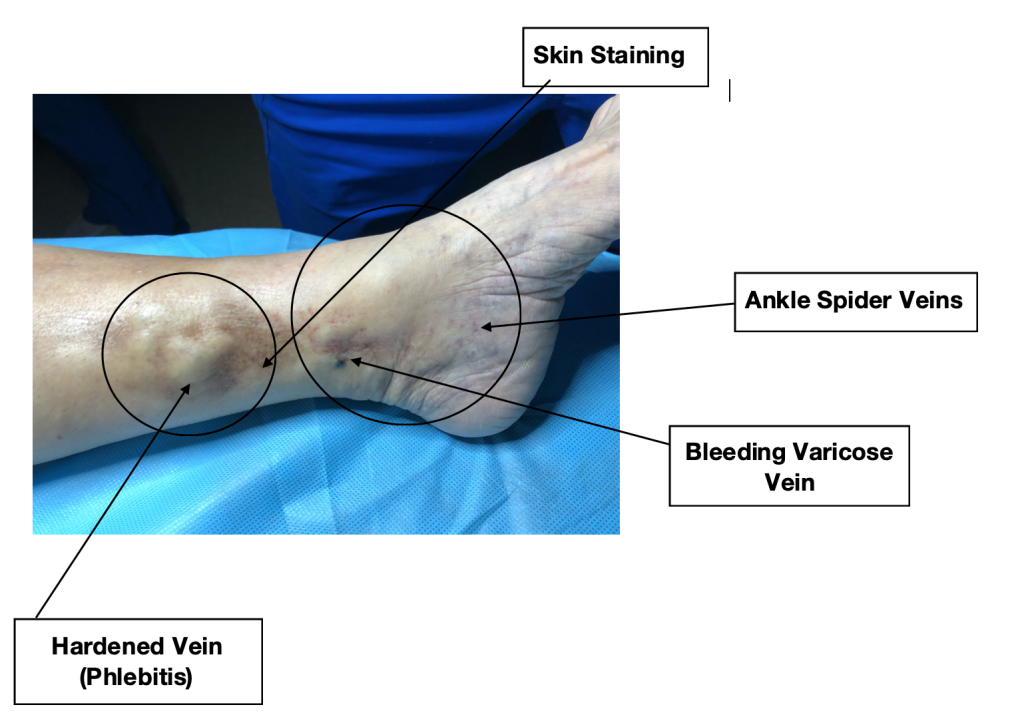
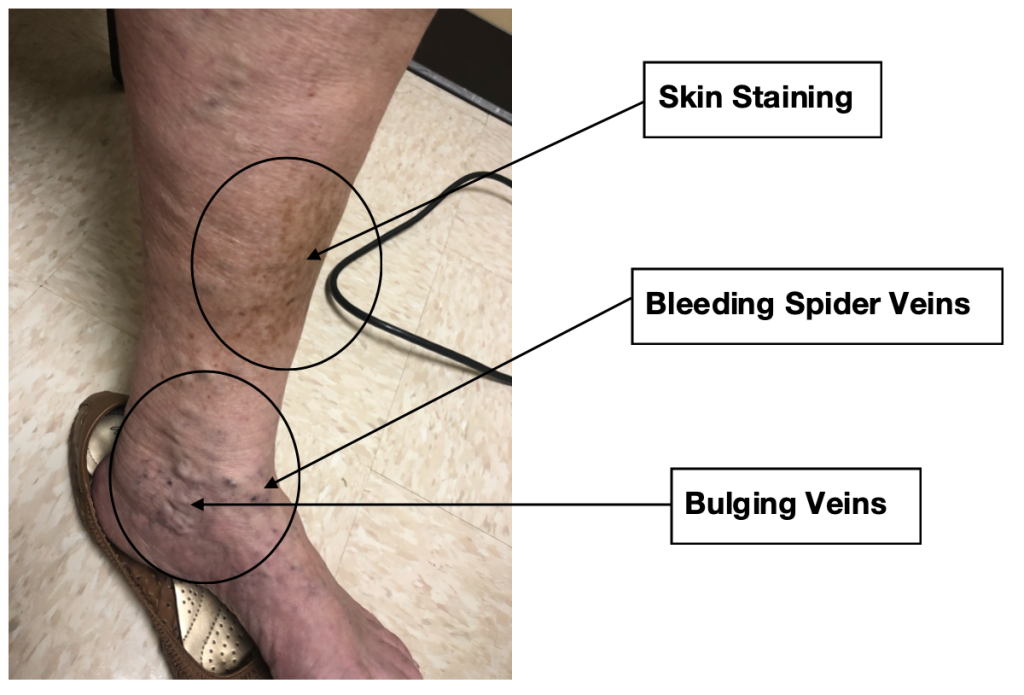
Skin staining is typically seen around the ankles. It is due to blood cells leaking out of the blood vessel under high pressure from prolonged vein reflux. The blood cells breakdown in the tissue causing what is the equivalent of a skin tattoo. Unfortunately, this type of skin staining does not clear up after it sets in, and prevention is the key.
Skin staining is a risk for developing a skin sore, and people can expect a risk of getting one if they have staining of about 1 in 10 chance over 5 years. This patient also has a bleeding spider vein which is always at the ankle (area of highest abnormal vein pressure) and is always blue or black in appearance. Due to the high vein pressure they can really bleed a lot in a short time.
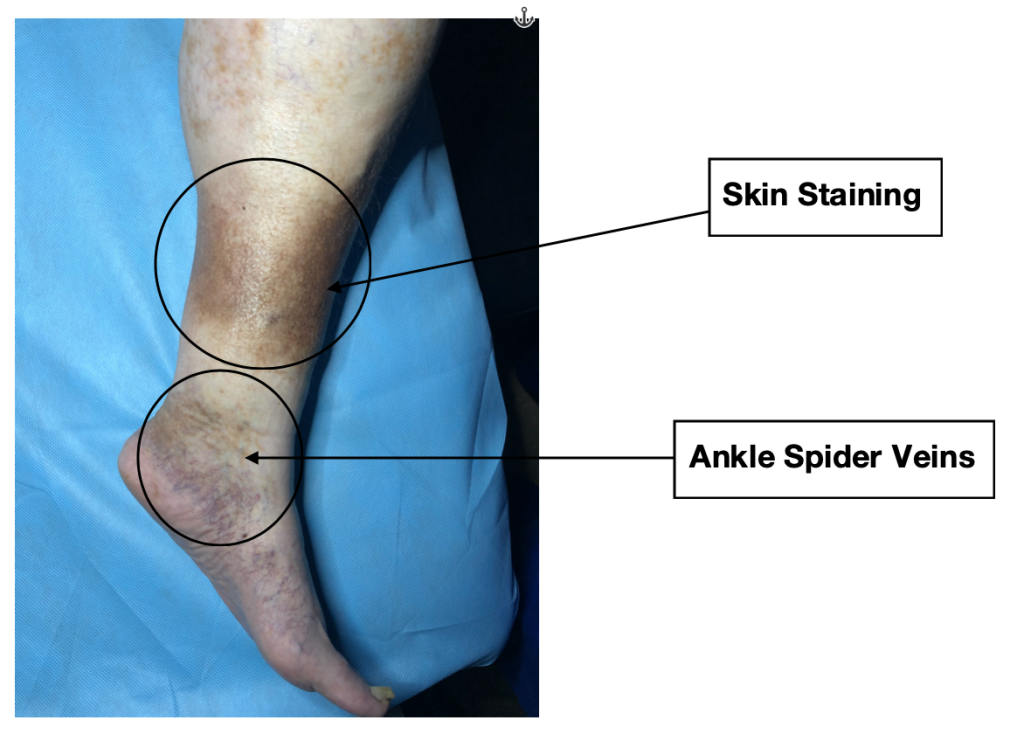
The skin staining is in the tyical area of the ankle where the vein pressure is very high. Blood cells leak out and stain the skin by creating a skin tattoo. once the stain has set in, it does not go away. Although, I have seen patients who do occasionally have a lightening of the discoloration after treatment. The best approach is preventative, treatment before skin staining sets in.
The skin here is red and irritated. This is the appearance of skin before it begins to form a skin sore. The remarkable thing about skin sores due to vein reflux is that there is almost never any prior skin injury – it develops spontaneously from nowhere. Skins sores can take months to years to heal, and some do not heal at all. The area of the skin staining with the red discoloration is often associated with dramatic itching causing great distress to patients. This resolves after treatment.
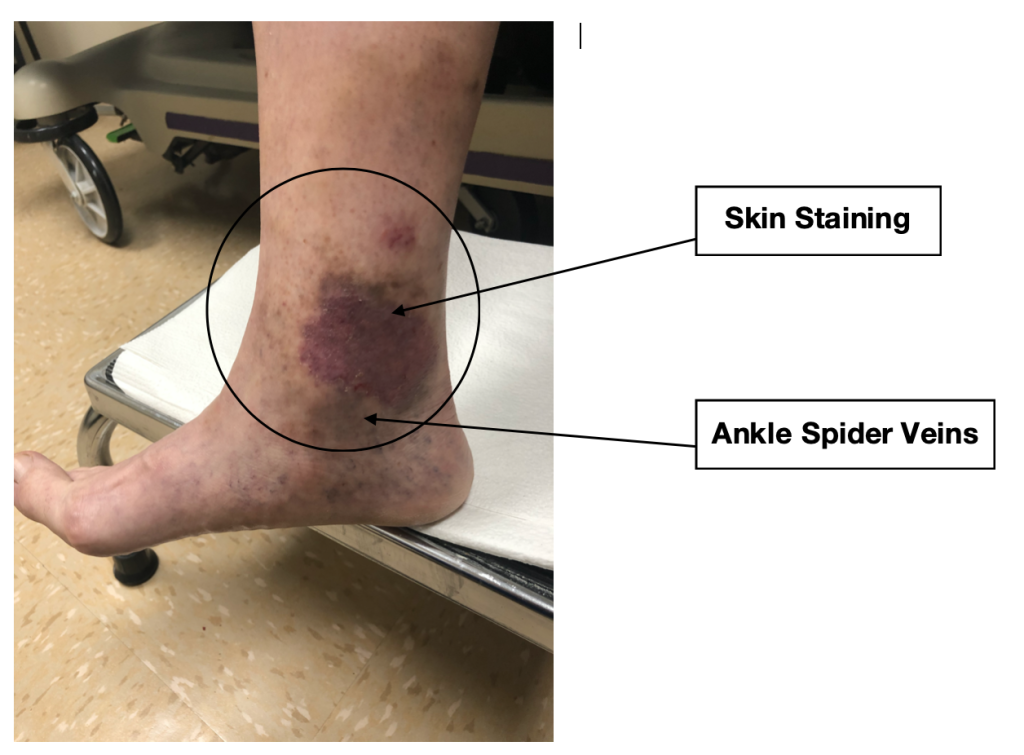
As the vein reflux progresses and vein pressures continue to increase, the skin area at the point of greatest vein pressure is prone to break down into a sore, also called a skin ulcer. When they occur, they can take months to years to heal, and some do not heal at all. When the sores do not heal, they tend to slowly enlarge. One peculiarity of these skin sores is that they develop spontaneously without prior skin injury or irritation. They often do not hurt very much unless a skin infection has set in.
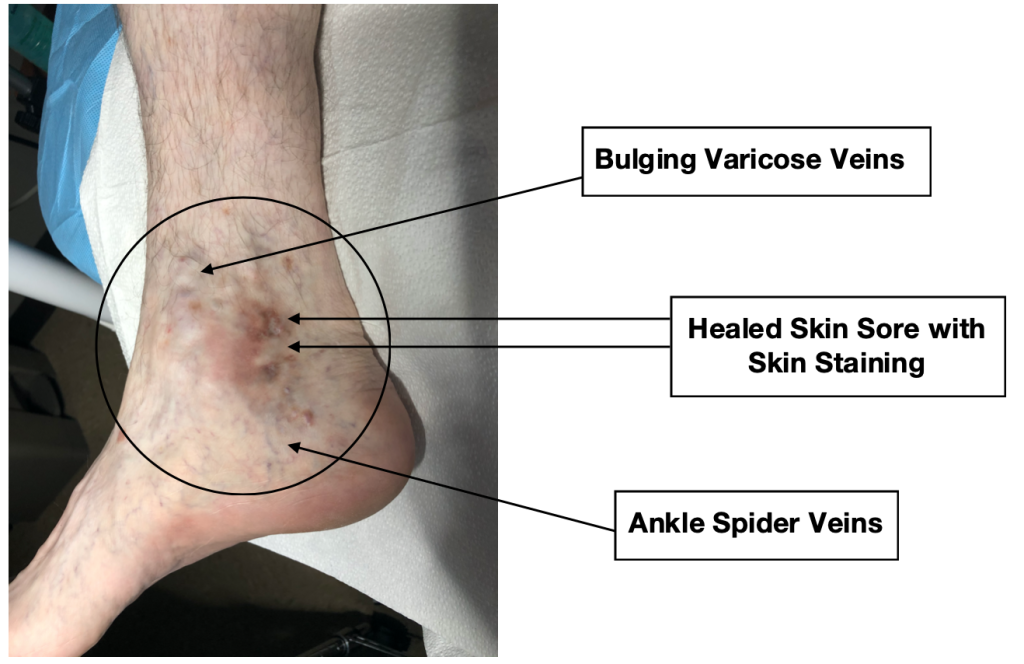
Phlebitis is very painful, but after it heals, there is a permanent hard non-tender lump where the vein used to be. This patient also had signs of high vein pressure due to vein reflux including skin staining and varicose and spider veins. This patient had several episodes of bleeding and the typical location is seen here at the ankle and arising from a small dark blue-black spider vein. Although a spider vein is small due to the very high pressure from the vein reflux (similar to blood pressure in the arm), they bleed dramatically.