
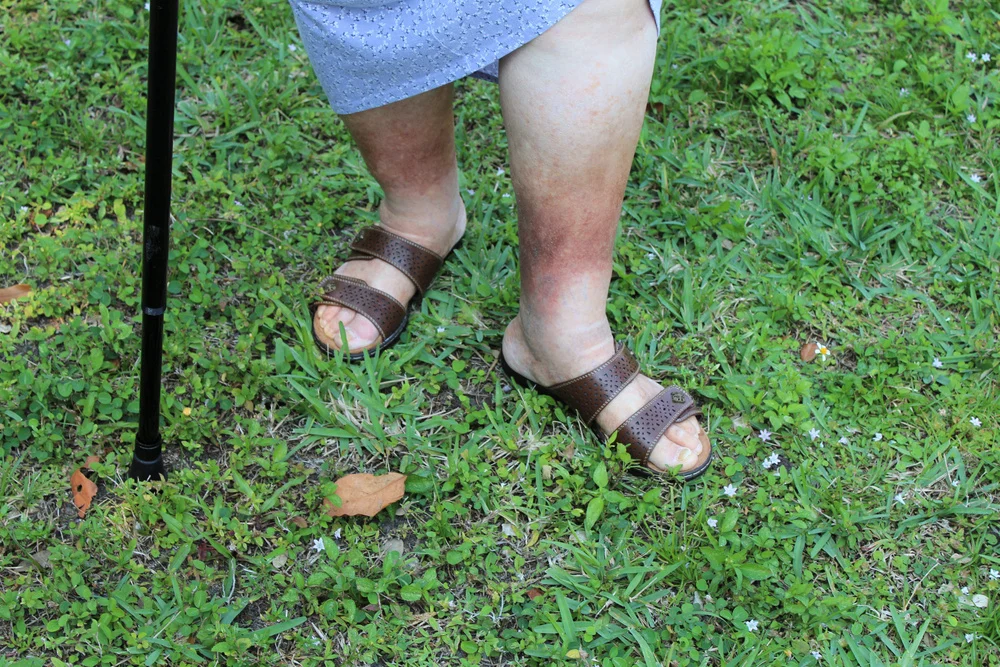
Brown or reddish-brown skin discoloration on your lower legs and ankles often signals a chronic vein condition called vein reflux. When blood pools in your leg veins, red blood cells break down and release iron, which seeps into your skin and leaves a lasting stain. Treating the underlying vein problem stops the staining from getting worse and may help it fade over time.
Tattoos are extremely popular and can be beautiful works of art. However, not all skin discoloration is attractive or intentional. Have you noticed dark, rust-colored splotches spreading across your ankles or shins and wondered where they came from? Many women feel self-conscious about these marks and quietly hide them under long pants, even in summer. As I often observe in my practice, these stains are more than a cosmetic concern. They are one of the clearest signs your veins are asking for help.
Key Takeaways
- Brown staining often points to your veins. Reddish-brown splotches on the lower legs and ankles are a common byproduct of chronic vein reflux.
- Iron causes the color. As pooled red blood cells break down, they release iron that soaks into the skin and stains it.
- Stained skin is more fragile. Discolored skin becomes delicate and can break open or get injured more easily than healthy skin.
- Other causes exist. Blood clots in varicose veins (thrombophlebitis) and Schamberg’s disease can also cause staining.
- Stockings help, but don’t stop it. Compression and leg elevation ease symptoms but cannot halt the staining from spreading.
- Treatment makes a difference. Treating the underlying vein condition stops the staining from worsening, and many patients see it lighten over time.
What Is Skin Staining on the Legs?
Skin staining is a discoloration that shows up as dark reddish-brown blotches, usually around the lower legs and ankles. Medical professionals call it hemosiderosis or hemosiderin staining. “Hemosiderin” is simply the name for the iron-containing material left behind when red blood cells break down.
Here’s how it happens. Ongoing vein reflux allows blood to pool in your lower legs. As those trapped red blood cells break down, they release iron. That iron seeps out of the tiny blood vessels and settles into your skin, much like a rust stain on a sidewalk. The result is a dark brown or reddish color visible on your skin’s surface.
This staining is typically permanent, but it may improve with treatment. Just as important, stained skin becomes more fragile and delicate than normal skin. It can break open and become damaged more easily, which is one reason we never want patients to ignore it..

What Causes Brown Skin Discoloration on Legs?
Vein Reflux
The most common cause we see is vein reflux. Your leg veins contain tiny one-way valves that help push blood back up to your heart. Think of them like little doors that should swing shut behind each push of blood. When those doors stop closing properly, blood falls backward and pools in your legs and ankles.
Along with discoloration, you may experience pain and swelling in your lower legs and feet. Many women also notice heaviness, aching, or tired legs by the end of the day.
Blood Clots and Thrombophlebitis
Skin staining can also occur with a blood clot. Thrombophlebitis is a condition in which a blood clot in a vein causes inflammation and pain. It nearly always occurs in large, bulging, visible varicose veins. When this happens, the veins close down and cause tenderness, redness, pain, and swelling. It may take several weeks to months to resolve, and it can leave staining behind.
Schamberg’s Disease
Another reason could be an underlying condition such as Schamberg’s disease. While no specific treatment exists to cure this type of discoloration, it is not life-threatening. If you’re unsure what’s behind your skin changes, your primary care provider is a great person to talk with first.
How Does Vein Reflux Get Worse Over Time?
Vein reflux is a progressive condition. That means it doesn’t stay the same or fix itself. Year after year, the pressure inside your leg veins continues to build, more blood pools, and more iron settles into your skin.
Early on, you might only feel aching, heaviness, or restless legs. Later, swelling around the ankles may become routine. As the condition advances, skin changes begin to appear, starting with small brown patches that slowly grow darker and larger. Without treatment, the stained area can thicken and become so fragile that even a minor bump causes a wound that heals slowly.
You don’t need visible varicose veins for this to happen. Many people with vein reflux have legs that look fairly normal until the staining shows up

Will Skin Staining Go Away on Its Own?
Will Skin Staining Go Away on Its Own?
Unfortunately, no. For a vein condition, leg elevation and compression stockings help minimize the effects, but they won’t prevent the staining from progressing. These steps manage your symptoms. They don’t fix the broken valves.
The only thing that stops the staining from naturally worsening is treating the underlying condition: the pooling of blood in your leg veins. A vein screening determines whether that condition is present, and vein treatment helps keep the staining from getting worse.
Will Skin Staining Fade After Vein Treatment?
Patients with varicose veins and brown-stained skin can see some improvement in appearance after treatment. By closing down abnormal veins, we take the pressure off your lower legs. Your body can then slowly process the trapped iron, and the staining often fades somewhat, and occasionally completely.
In my experience, however, each person is unique and responds differently to treatment. It isn’t possible to predict exactly how each person will respond. I recall treating one patient who came to me with considerable staining. In her case, the skin staining cleared up completely over a period of two years. So it can happen, but most of the time I see the staining lighten and fade without disappearing completely.
Why Does Early Treatment Matter?
The sooner we treat vein reflux, the less time iron has to build up in your skin. Early treatment can:
- Stop new staining from forming
- Keep existing discoloration from spreading
- Protect fragile skin from breaking open
- Relieve aching, swelling, and heaviness
Today’s options are minimally invasive. Treatments such as endovenous ablation and sclerotherapy are performed right in our office with little to no discomfort, and most patients return to their normal routines quickly. Our experts create tailored treatment plans that address both your leg health and your aesthetic goals, and we work directly with your insurer to simplify the coverage process.
Take the First Step Toward Healthier Legs
If you’ve noticed brown or reddish discoloration on your lower legs or ankles, please don’t wait. Without treatment, the staining will continue and the discolored area will grow larger over time. Schedule a free vein screening at Missouri Vein Care today. Our team will find out what’s happening beneath the surface and help you protect your skin, ease your discomfort, and feel confident in your legs again.

Frequently Asked Questions
What does brown discoloration on my ankles mean?
It often signals chronic vein reflux. When blood pools in your lower legs, iron from broken-down red blood cells seeps into the skin and leaves a reddish-brown stain.
Is hemosiderin staining dangerous?
The stain itself isn’t dangerous, but it signals an underlying vein problem. Stained skin is also more fragile and can break open more easily, so it deserves attention.
Can compression stockings get rid of skin staining?
No. Compression stockings and leg elevation can ease symptoms and minimize the effects, but they won’t stop the staining from progressing or remove existing discoloration.
How long does it take for staining to fade after treatment?
It varies from person to person. Fading happens slowly, often over months to years. Most patients see the staining lighten, and occasionally it clears completely.
Can I have vein reflux without varicose veins?
Yes. Many people with vein reflux have no bulging veins at all. Aching, swelling, heaviness, and skin staining may be the only signs.
Does insurance cover vein treatment for skin staining?
Vein reflux is a recognized medical condition, so many insurance plans cover treatment. Our team works directly with your insurer to help coordinate coverage.