
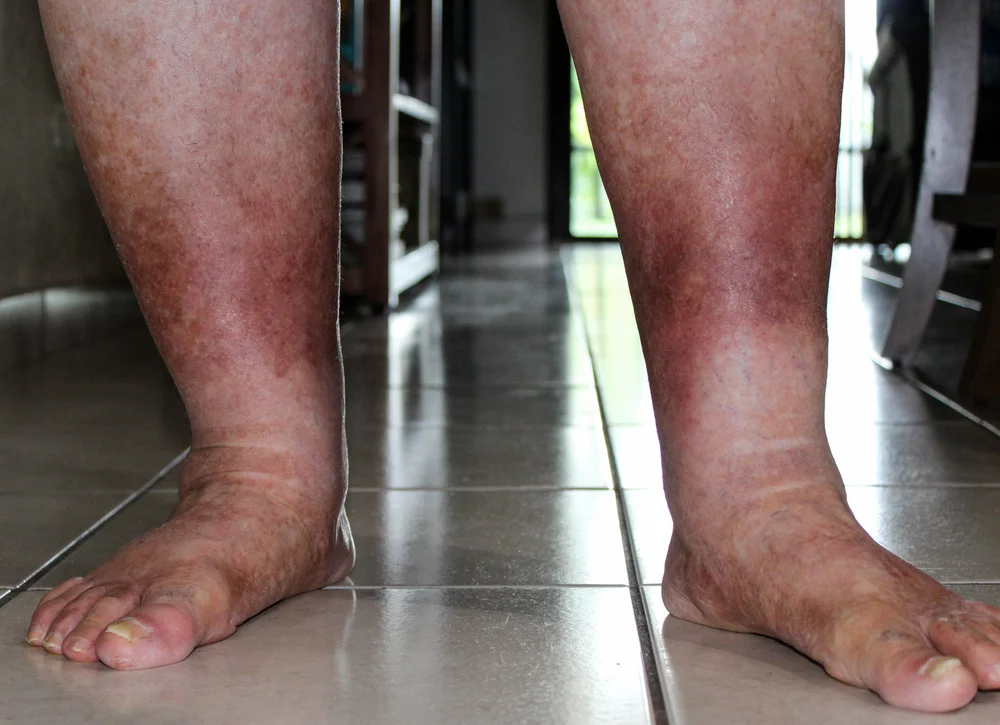
Quick Answer: Red or brown skin stains on your lower legs are often signs of chronic venous insufficiency, a condition where weakened veins let blood pool in your legs. Red patches come from inflammation, while brown stains form when red blood cells break down in the skin’s tissue. Both usually point to an underlying vein problem that benefits from early evaluation.
Key takeaways
- Red skin discoloration is caused by inflammation from pooling blood and often itches around the calf or inner ankle.
- Brown skin discoloration happens when red blood cells leak into the tissue and leave behind iron-tinted deposits that act like a permanent stain.
- Both colors are frequently linked to chronic venous insufficiency, a condition where leg veins struggle to send blood back to the heart.
- Skin stains tend to worsen over time if the underlying vein issue isn’t addressed.
- Catching discoloration early gives you the best chance of lightening or improving it with treatment.
- A simple vein ultrasound can confirm whether a vein condition is behind your skin changes.
What causes red skin discoloration on your legs?
Red skin discoloration on your legs is usually the result of inflammation caused by blood pooling in the lower leg. When circulation slows down, stagnant blood irritates the surrounding tissue, and your skin responds the way it would to any injury: it turns red.
Have you noticed a red patch on your calf or inner ankle that just won’t fade, and that sometimes itches more than you’d expect? That’s a classic pattern I see often in my practice. Over months or years, this ongoing inflammation can cause the skin to thicken and harden as it forms scar tissue. It’s the body’s natural healing response, but in this case, it’s responding to a circulation problem rather than a cut or bruise.
What causes brown skin discoloration on your legs?
Brown skin discoloration develops for a different reason than red patches do. It happens when pooling blood puts pressure on nearby blood vessels, causing red blood cells to leak into the surrounding tissue.
Here’s where it gets interesting: your body has cells called macrophages whose job is to clean up anything that doesn’t belong in your tissue. When red blood cells break down, they release hemoglobin, the iron-containing protein that normally carries oxygen through your blood. Hemoglobin has a brownish tint because of that iron content, and as macrophages absorb it, they take on that same brown hue. This process creates a stain in the skin that works much like a tattoo: once it’s there, it typically doesn’t fade on its own.
How are these skin stains linked to vein problems?
Skin stains on your lower legs are most often linked to chronic venous insufficiency, a condition where the veins in your legs don’t circulate blood efficiently. This causes blood to pool instead of flowing properly back toward your heart, and that pooling is what triggers both red and brown discoloration.
It’s understandable to feel alarmed when you notice these changes, especially if you’ve always taken pride in how your legs look. You’re not alone, and these stains are more common than you might think among people with vein circulation issues. The color you see often depends on how long the condition has been present and how your body has responded to it.
Red versus brown: what’s the difference?
- Red discoloration tends to appear earlier and is tied to active inflammation. It’s often itchy and concentrated in the calf or inner ankle.
- Brown discoloration develops later, after blood cells have broken down in the tissue. It’s generally permanent and doesn’t itch the way red patches do.

Can skin discoloration from vein disease be treated?
Yes, skin discoloration from vein disease can often be improved with the right treatment, especially when it’s caught early. While brown stains rarely disappear completely, vein treatments have been shown to lighten them and make them far less noticeable.
Treating the underlying vein condition is the key to preventing further discoloration and protecting your skin from more damage. A primary care provider or vein specialist can recommend options based on how advanced your condition is, which may include minimally invasive procedures designed to restore healthy circulation.
When should you see a primary care provider about leg discoloration?
You should see a primary care provider as soon as you notice red or brown discoloration around your calves or ankles, rather than waiting to see if it improves on its own. Left untreated, chronic venous insufficiency tends to advance, which means the discoloration and related symptoms can worsen over time.
A simple vein screening or vein ultrasound can determine what’s happening beneath the surface and whether a vein condition is the cause. Early evaluation gives you the best opportunity to manage the condition and protect both the health and appearance of your legs.
If you’ve noticed red or brown stains forming on your legs, don’t wait for them to spread. Reach out to a vein care specialist for a screening so you can understand what’s causing the changes and explore options that fit your needs.
Frequently asked questions
Is skin discoloration on the legs dangerous?
Skin discoloration itself isn’t an emergency, but it’s often a sign of an underlying vein condition that can worsen without treatment. Chronic venous insufficiency can lead to increased pain, skin thickening, and in advanced cases, ulcers, so it’s worth having it evaluated by a specialist.
Will the brown stains go away on their own?
Brown stains rarely fade completely on their own because they form when iron-containing deposits settle into the skin’s tissue. Vein treatments can help lighten the appearance over time, but the earlier you begin treatment, the better your results are likely to be.
Who is at risk for developing venous skin stains?
Anyone with chronic venous insufficiency is at risk for developing red or brown skin stains, particularly around the calves and ankles. Risk factors for vein disease generally include age, prolonged standing, family history, and previous leg injuries.
What happens if vein-related skin discoloration is left untreated?
If left untreated, vein-related skin discoloration tends to advance alongside the underlying circulation problem. Over time, this can lead to thicker, harder skin, more noticeable staining, and a higher risk of complications like skin breakdown and skin sores.