Quick Read: Veins usually look blue because of how light reflects through your skin, not because something is wrong. In most cases, visible veins are simply a trait of fair skin, thin skin, or vein depth. But when veins bulge, twist, or ache, that can point to vein reflux, a condition where faulty valves let blood pool in the legs. If your veins come with pain, swelling, or skin changes, it’s worth scheduling a vein screening with a specialist.
Key Takeaways
- Blue veins are often just a trick of light and skin tone, not a health problem.
- Vein reflux happens when the valves inside your veins stop working properly, letting blood pool instead of flowing back to the heart.
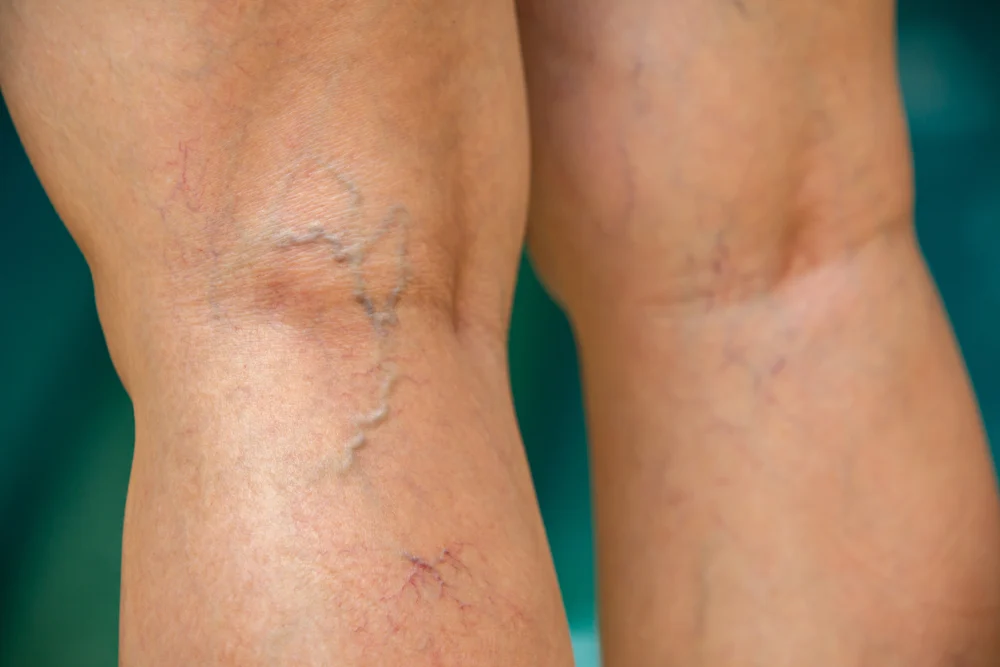
- Spider veins and varicose veins are both visible from the surface of the skin and can look blue, but they differ in size, depth, and severity.
- Left untreated, vein reflux tends to get worse — not better — over time.
- Insurance typically covers treatment when symptoms are present; purely cosmetic treatment, like sclerotherapy for veins without symptoms, usually is not covered.
- A free vein screening is the simplest way to find out what’s happening beneath your skin.
Have you ever glanced down at your legs and noticed veins that seem a little too visible, a little too blue, and wondered if that’s normal? As I often observe in my practice, this is one of the most common questions women bring up — and the honest answer is: it depends. Let’s walk through what’s actually happening beneath your skin, when it’s simply biology, and when it might be time to have a primary care provider or vein specialist take a closer look.
Why Do Veins Appear Blue?
Blood is never truly blue. It’s red, thanks to the oxygen-carrying protein hemoglobin. So why do your veins look blue or purple through your skin?
The answer comes down to light. Veins sit a few millimeters beneath the surface of your skin, and your skin absorbs red and yellow wavelengths of light more readily than blue. Blue light doesn’t travel as deeply, so it bounces back toward your eyes first. That’s why a vein filled with dark red blood can still appear blue from the outside.
A few factors influence just how visible that blue tone is:
- Skin tone. Lighter or thinner skin allows more of the underlying vein color to show through, while deeper skin tones may mask it.
- Vein depth. Veins sitting closer to the surface tend to look more vivid than veins buried deeper in tissue.
- Body fat percentage. Less fat between your skin and your veins often means more visibility.
In the video below, I go into more detail on why your veins appear blue and why yours might be appearing more visible than normal:
When Are Blue Veins Completely Normal?
In most cases, those blue lines on your hands, wrists, or legs are nothing more than biology doing what it does. If the veins lie flat and don’t cause pain, swelling, or a heavy feeling, they’re likely visible simply because of your skin tone, vein depth, or genetics. Many women notice this becomes more pronounced with age, as skin naturally thins and loses some of its underlying fat layer.
The distinction is simple: normal veins are flat and symptom-free. If that matches what you’re seeing, there’s usually nothing to worry about.
How Do Vein Reflux and Blood Pooling Make Veins Visible and Concerning?
This is where things can shift from “just how my skin looks” to a genuine medical concern. Healthy veins depend on a series of one-way valves to push blood from your legs back up toward your heart, working against gravity with every step. When those valves weaken or become damaged — a condition called vein reflux, or venous insufficiency — blood can flow backward and pool in the lower legs instead of moving efficiently upward.
As blood pools, pressure builds inside the vein walls, causing them to stretch, bulge, and become more visible from the surface of the skin. This is often how a faint blue line turns into the twisted, rope-like appearance many people associate with varicose veins. That pooling can also leave the surrounding skin feeling warm, heavy, or achy, especially after long stretches of standing or sitting.
Vein reflux isn’t only a cosmetic issue. It’s a circulation problem. Left unaddressed, pooling blood can lead to inflammation, skin discoloration, and growing discomfort over time.

What Is the Difference Between Spider Veins and Varicose Veins?
Spider veins and varicose veins are both visible from the surface of the skin and often appear blue, but they’re not the same condition.
Spider veins are small, thin, web-like veins that typically appear blue, purple, or red. They sit close to the skin’s surface and usually don’t bulge or cause much discomfort, although some women notice mild itching or burning.
Varicose veins are larger, twisted, and raised, often bulging visibly above the skin. They’re more likely to bring aching, heaviness, swelling, or throbbing, particularly after standing for long periods.
Spider veins are usually considered a cosmetic concern. Varicose veins are more frequently tied to underlying vein reflux and may call for a medical evaluation.
When Are Blue Veins Not Normal? Signs of Vein Reflux
So how do you know when it’s time to stop wondering and start asking a primary care provider for an opinion? Watch for these signs of vein reflux:
- Veins connected to spider veins
- Veins that become curvy or take S-turns
- Veins with bulging spots along their length
- Burning, stinging, or itching around the vein
- Aching, throbbing, or a heavy sensation in the legs, especially by day’s end
- Swelling around the ankles or lower legs
- Skin discoloration or a brownish tint near the ankles
If any of this sounds familiar, don’t dismiss it as “just getting older.” These are your body’s way of signaling that blood isn’t circulating the way it should.
What Happens if Vein Reflux Goes Untreated?
It’s tempting to put off dealing with something that seems mostly cosmetic. But vein reflux tends to progress rather than resolve on its own. Over time, untreated reflux can lead to:
- Increasing pain and leg fatigue
- Worsening swelling that limits mobility
- Skin changes, including hardening or darkening near the ankles
- Venous ulcers, which are open sores that can be slow to heal
- A higher risk of blood clots in some cases
Early intervention tends to produce the best outcomes, both in comfort and in the simplicity of treatment required.
How Is Vein Reflux Treated?
The reassuring news: modern vein treatments are far less invasive than many people expect. Depending on your symptoms and the severity of your reflux, a specialist may recommend:
- Compression stockings. Often the first step, these support circulation and reduce swelling.
- Endovenous laser therapy. A minimally invasive procedure that uses heat to close off the faulty vein, redirecting blood flow to healthier veins nearby.
- Sclerotherapy. An injection-based treatment that causes the vein to collapse and fade over time, commonly used for spider veins and smaller varicose veins.
Choose compression stockings if your symptoms are mild and you want a non-invasive starting point. Choose endovenous laser therapy if you have symptomatic reflux with larger, bulging veins. Choose sclerotherapy if your main concern is the appearance of spider veins or small varicose veins without significant symptoms.
One detail worth knowing: vein reflux with symptoms like pain, swelling, or skin changes is covered by most insurance plans, since it represents a medical condition rather than a cosmetic one. Treating veins purely for appearance — such as sclerotherapy for spider veins with no underlying symptoms — is usually considered cosmetic and is not covered. Understanding this distinction upfront can help you plan your treatment path with fewer surprises.
Taking the Next Step for Your Leg Health
If you’ve been studying your legs in the mirror, wondering whether what you’re seeing is simply how your skin reflects light or a sign of something more, you deserve a clear answer, not more guesswork. The only way to know for certain is to have your veins evaluated by a specialist who can look beyond the surface and assess what’s happening with your circulation.
We encourage you to schedule a free vein screening. It’s a simple, no-pressure way to understand what’s really going on in your legs and explore tailored treatment options, from compression therapy to minimally invasive procedures, so you can feel confident and comfortable again.

Frequently Asked Questions
Are blue veins a sign of poor circulation?
Not always. Blue veins are often just a result of skin tone and vein depth. However, if the veins bulge, ache, or come with swelling, they may indicate vein reflux — a form of impaired circulation that’s worth having evaluated by a primary care provider or vein specialist.
Can spider veins turn into varicose veins?
Spider veins and varicose veins can both stem from underlying vein reflux, but spider veins don’t automatically progress into varicose veins. A vein specialist can determine whether reflux is present and whether treatment is recommended.
Does insurance cover vein treatment?
Insurance coverage typically depends on whether the condition is medical or cosmetic. Veins causing pain, swelling, or skin changes due to reflux are generally covered, while treatment for veins without symptoms, done purely for appearance, is usually not.
How long does treatment for vein reflux take?
Many minimally invasive treatments, like endovenous laser therapy, are performed in-office and take less than an hour, with most patients returning to normal activity within a day or two.
Is vein reflux a serious health condition?
It can be if left untreated. While many cases start as mild discomfort or a cosmetic concern, untreated vein reflux can progress to skin changes, ulcers, and more significant circulation issues over time.