
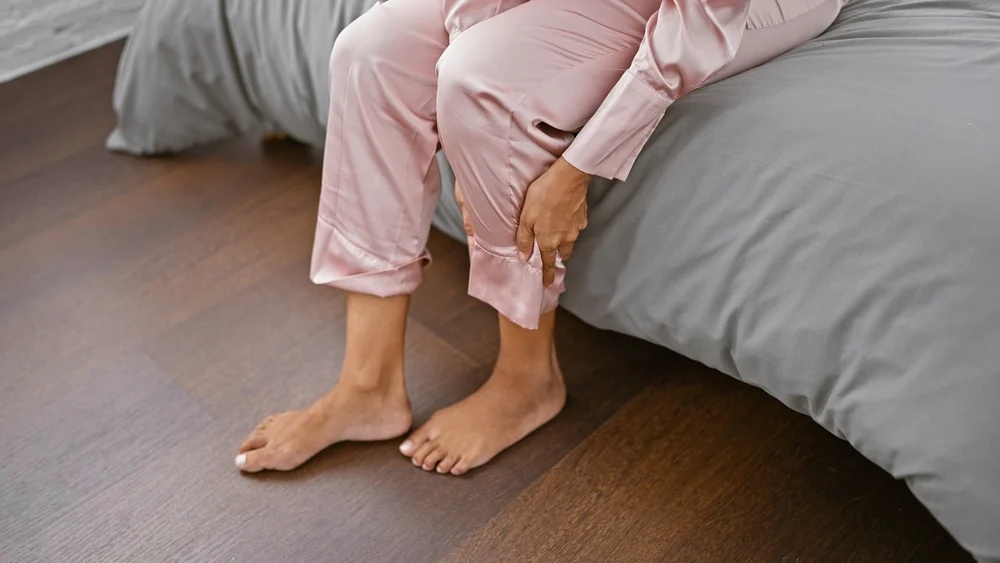
Leg pain that flares up when you lie down can stem from two very different sources: your spine or your veins. Back-related pain often follows a nerve pathway, radiating from your lower back down one leg, and may worsen with certain positions or movements. Vein-related pain, on the other hand, tends to feel like a dull ache, heaviness, or throbbing in both legs, and it’s often relieved, rather than worsened, by elevating your legs. If your discomfort improves when you prop your legs up, a vein condition may be the more likely culprit.
One characteristic of vein-related leg pain is that it always worsens at night. Some assume it’s simply a sign of getting older. Others chalk it up to a long day on their feet. But as I often observe in my practice, leg pain at night can point to two very different issues: a problem in your back, or a problem in your veins.
Knowing the difference matters. Back pain and vein disease are treated in completely different ways, and mistaking one for the other can delay the relief you deserve. This guide will walk you through the key differences, the patterns worth watching for, and what steps to take next.
Key Takeaways
- Location matters. Back-related leg pain usually affects one leg and often follows a specific nerve pathway, sometimes reaching from the lower back down to the foot. Vein-related pain more commonly affects both legs and centers around the calves or ankles.
- Position changes tell a story. If elevating your legs brings relief, your veins may be involved. If certain spinal positions (like twisting or bending) trigger the pain, your back may be the source.
- Vein disease doesn’t always look like varicose veins. Many people with venous insufficiency have no visible bulging veins at all, yet still experience heaviness, aching, swelling, or restless legs.
- Both conditions can coexist. It’s entirely possible to have a back issue and a vein issue at the same time, which is why a proper evaluation is so important.
- Early evaluation leads to easier treatment. Whether the source is your spine or your veins, addressing the problem sooner rather than later typically means simpler, less invasive care.
- Your primary care provider is a great starting point. They can help determine whether your symptoms warrant a referral to a spine specialist, a vein specialist, or both.
When Leg Pain Points to the Back
Back-related leg pain often has a distinct signature. It commonly stems from nerve compression in the lower spine, a condition frequently referred to as sciatica. When a nerve root is pinched or irritated, the pain can radiate down through the buttock, thigh, and calf, sometimes reaching all the way to the foot.
Here’s what tends to set back-related leg pain apart:
- It usually affects one leg, not both.
- The pain may feel sharp, shooting, or electric, rather than dull or achy.
- Numbness or tingling often accompanies the pain, following a specific nerve path.
- Certain positions worsen it. Bending, twisting, sitting for long periods, or even coughing and sneezing can intensify the discomfort.
- Lying flat doesn’t always help. In fact, some back conditions cause more pain when lying down, particularly if the mattress lacks support or the spine is misaligned.
If this description sounds familiar, your primary care provider or a spine specialist can help evaluate whether a herniated disc, spinal stenosis, or another back condition might be contributing to your symptoms.
Pay Attention to Patterns: When Your Legs Are Trying to Tell You Something
Vein-related leg pain tells a different story, and it’s one worth paying close attention to. Chronic venous insufficiency occurs when the valves inside your leg veins weaken, making it harder for blood to travel back up to your heart. As blood pools in the lower legs, it creates a set of symptoms that many women describe as simply “tired legs,” without realizing there may be an underlying vein condition.
Watch for this pattern of symptoms, especially if they occur in both legs and worsen throughout the day:
- Heaviness or fatigue in the legs, particularly by evening
- A dull, achy sensation rather than sharp or shooting pain
- Swelling around the ankles or lower legs
- Restless legs, especially at night, with an uncomfortable urge to move them
- Throbbing or cramping, which may intensify after standing or sitting for long stretches
- Relief when legs are elevated, since raising your legs helps blood flow back toward the heart
These symptoms often build gradually over months or even years, which is part of why so many women dismiss them. If you find yourself reaching for a pillow to prop your legs up at night just to feel comfortable, that’s a meaningful clue pointing toward your veins.
You Don’t Need Visible Veins to Have a Vein Problem
Here’s something I want every patient to understand clearly: vein disease doesn’t always look the way you’d expect. Many women picture bulging, rope-like varicose veins when they think of vein problems. But venous insufficiency can exist well before any veins become visibly enlarged or discolored.
In fact, some of the earliest and most bothersome symptoms (heaviness, aching, swelling, restless legs) can occur in legs that look completely normal on the surface. The valve dysfunction happens beneath the skin, in veins you can’t see, long before any visible changes appear.
This is precisely why so many women live with vein disease for years without realizing it. They assume that because their legs “look fine,” there’s nothing to investigate. Unfortunately, waiting can allow the condition to progress, sometimes leading to more visible veins, skin changes, or discomfort that becomes harder to ignore.
If your legs feel heavy, achy, or restless, but you don’t see any obvious varicose veins, that doesn’t rule out a vein condition. It simply means the problem hasn’t become visible yet.

So, What’s Next? Differentiating Back Pain From Vein Pain
Given how much overlap there can be between these two conditions, how do you know which one applies to you? A few simple questions can help guide your thinking:
- Does the pain affect one leg or both? One leg often suggests a back issue; both legs more often point to a vein condition.
- Does elevating your legs help? Relief with elevation is a strong indicator of a vein problem.
- Does the pain follow a specific nerve pathway, such as radiating from your lower back to your foot? This pattern suggests a spinal cause.
- Does the discomfort worsen with prolonged standing or sitting, and ease when you move around? This is a hallmark of venous insufficiency.
- Do you notice numbness, tingling, or weakness alongside the pain? These symptoms often point toward nerve involvement, and by extension, your back.
If you’re still unsure, that’s completely understandable. These conditions can be tricky to tell apart, and sometimes they even occur together. The best next step is to schedule an free vein screening where we can determine whether a treatment plan at Missouri Vein Care makes sense for your specific symptoms.
At Missouri Vein Care, we specialize in identifying venous insufficiency early, often before visible veins appear, using minimally invasive diagnostic tools and treatment options designed for comfort and quick recovery. If your legs feel heavy, achy, or restless at night, don’t wait to find out why. Early evaluation typically means simpler, less invasive treatment and faster relief.

Frequently Asked Questions
Can back problems and vein problems cause leg pain at the same time?
Yes. It’s entirely possible to have both a spinal issue and venous insufficiency simultaneously. This is one reason a thorough evaluation is so important, since treating only one condition may leave some of your symptoms unresolved.
Why does my leg pain get worse when I lie down at night?
This depends on the cause. If lying flat worsens pain that radiates down one leg, a back condition may be involved. If your legs simply feel heavy or achy rather than sharply painful, and elevating them helps, venous insufficiency is a more likely explanation.
Is leg swelling always related to vein disease?
Not always, but it’s a common symptom of venous insufficiency, especially when paired with heaviness or aching that improves with elevation. Swelling can also stem from other causes, so it’s worth discussing with your primary care provider.
How long does it take for vein disease to become visible?
This varies significantly from person to person. Some individuals experience symptoms like heaviness and restlessness for years before any visible veins develop, while others notice visible changes more quickly. Early evaluation can help catch the condition before it progresses.
What should I do first if I’m not sure whether my pain is from my back or my veins?
Start with your primary care provider. They can assess your symptoms and refer you to the appropriate specialist, whether that’s a vein specialist like the team at Missouri Vein Care or a spine specialist, depending on what they find.
Are treatments for venous insufficiency painful or invasive?
Most modern vein treatments are minimally invasive, designed to minimize discomfort and allow for a quick return to daily activities. Missouri Vein Care creates personalized treatment plans based on each patient’s specific symptoms and goals.